Table of Contents
- Best Affordable Gluten Free Pantry Staples: A Quick Comparison
- How We Chose These Gluten Free Pantry Staples
- Grains and Noodles: The Base of a Gluten Free Pantry
- Baking Essentials: Flours, Crumbs, and Mixes
- Is Bulk Buying Really Worth It for Gluten Free Staples?
- Affordable Gluten-Free Meal Planning for the Week
- Conclusion
- Frequently Asked Questions
Last Updated: October 7, 2026
Best Affordable Gluten Free Pantry Staples: A Quick Comparison
The global gluten-free products market was valued at USD 8.5 billion in 2025, according to Grand View Research's market size valuation, and it is still climbing. That growth hasn't made everyday shopping any cheaper. Gluten-free products can cost up to four times more than comparable conventional foods, a gap documented by Columbia University research cited by Beyond Celiac. At Ambrosia Natural Foods, we offer naturally gluten-free staples.
Here's the short answer: the best affordable gluten free pantry staples are grains, noodles, flours and crumbs that are naturally gluten-free to begin with. They cost less per serving, stretch further, and don't rely on specialty manufacturing.
| Staple | Our Price | Best For | Why It Earns a Spot |
|---|---|---|---|
| Organic Quinoa Red & White | $9.49 | Bowls, sides, salads | Naturally gluten free, source of vitamins B2, B6 and E |
| Organic Brown Rice Vermicelli Noodles | $5.69 | Stir fries, soups | Vegan, non-GMO, cooks in minutes |
| Organic 100% Brown Rice Noodles | $5.69 | Spaghetti swap | Fiber, B vitamins, selenium and magnesium |
| Organic Gluten-Free Brown Rice Breading Crumbs | $4.29 | Coating, topping | Made in a wheat-free and nut-free facility |
| Gluten Free Panko | $6.79 | Crispy coatings | Light, crunchy, free of gluten, soy, egg and nuts |
| Gluten-Free Almond Flour | $15.99 | Cakes, cookies, crusts | Finely ground blanched almonds |
| Graham Style Crumbs Gluten Free | $6.49 | Pie crusts, cheesecake | Canadian-made, ready for dessert bases |
| Gluten-Free Active Dry Yeast | $8.39 | Bread, pizza dough | Reliable for yeasted gluten-free baking |
| Gluten-Free Pancake & Baking Mix | $32.29 | Pancakes, all-purpose baking | 8 grams of whole grains per serving |
| Organic Sprouted Steel Cut Oats | $7.39 | Hot breakfasts | Sprouted for easier digestion |
How We Chose These Gluten Free Pantry Staples
We built this list around four filters, and price was only one of them.

First, the item had to be naturally gluten free rather than a processed substitute. Second, it had to earn its place across multiple meals, not just one recipe. Third, we looked at cost per serving, not cost per package, because a larger bag of a staple you use weekly beats a small bag of something you use twice a year. Fourth, every product had to be something we actually stock and ship across Canada.
We'd add grains, noodles and flours to that list.
Grains and Noodles: The Base of a Gluten Free Pantry
Grains and noodles carry the most weight in any gluten-free kitchen because they anchor breakfast, lunch and dinner. Get this category right and the rest of your shopping list gets cheaper.
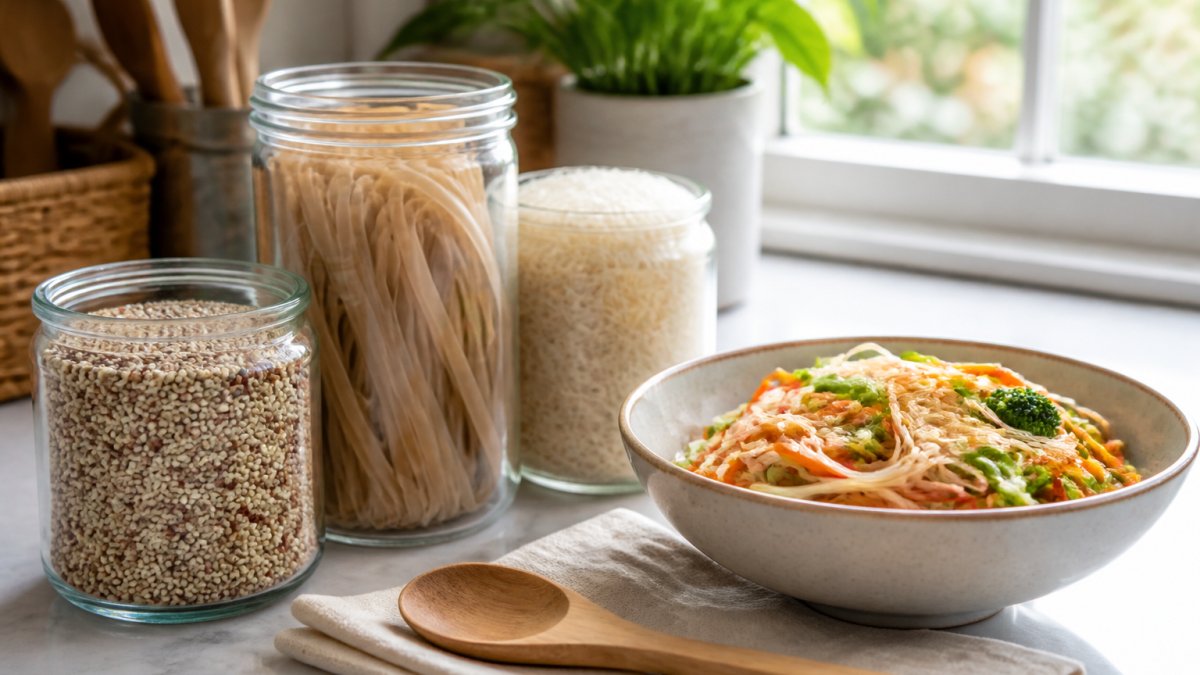
Quinoa, Rice Noodles, and Vermicelli
Organic Quinoa Red & White from Gogo Quinoa is a blend of red and white royal quinoa with a larger grain size, fluffy texture and nutty flavor. It's non-GMO, gluten free, kosher, and a source of vitamins B2, B6 and E. Serve it as a side or build a bowl with vegetables and your favourite toppings.
Organic Brown Rice Vermicelli Noodles from King Soba are fine, tender and vegan. They work in hot and cold dishes alike, from stir fries to soups to sweet desserts. Organic 100% Brown Rice Noodles from the same line bring fiber, B vitamins, selenium and magnesium to the table, and they swap in for spaghetti without anyone noticing.

Both noodle options come in at $5.69, which is where the affordability argument gets concrete.
Baking Essentials: Flours, Crumbs, and Mixes
Baking is where gluten-free shopping gets expensive, and it's also where the smartest swaps live. Buy the base ingredients once and you stop paying per-item premiums.
Gluten-Free Almond Flour from Grain Zero is finely ground blanched almonds, ideal for cakes, cookies and pie crusts when you follow recipe proportions developed for almond flour. At $15.99 it's the priciest item on this list, but a bag covers multiple batches.

For coatings, Organic Gluten-Free Brown Rice Breading Crumbs at $4.29 are made in a wheat-free and nut-free facility, and Gluten Free Panko at $6.79 delivers a light, crispy finish with 3 grams of protein per serving and no gluten, soy, egg or nuts. Graham Style Crumbs Gluten Free at $6.49 handle pie crusts, cheesecakes and dessert toppings. Gluten-Free Active Dry Yeast at $8.39 makes sandwich bread, dinner rolls and pizza crust possible at home, and Gluten-Free Pancake & Baking Mix at $32.29 covers pancakes and general baking with 8 grams of whole grains per serving.
How to Store Gluten-Free Flour So It Lasts
Store gluten-free flour in an airtight container in a cool, dark spot, and refrigerate or freeze nut-based flours like almond flour for longer shelf life. Bring frozen flour to room temperature before baking so it measures accurately.
The bigger risk is cross-contact, not spoilage. Keep a dedicated scoop, label the container, and store your gluten-free flours on a separate shelf from wheat flour. If you bake often, portion larger bags into smaller jars so you're not opening the main container every week.
Is Bulk Buying Really Worth It for Gluten Free Staples?
Bulk buying is worth it for gluten-free shoppers specifically because the per-unit premium on specialty items is so steep. Buying staples in larger quantities is a primary strategy for reducing the cost of gluten-free living, and the same logic applies to grains, flours and noodles.
The catch is storage and turnover. Buying 5 kilograms of almond flour you won't finish before it goes stale is not a saving. Our rule: bulk-buy the items you use weekly, buy small on the items you use seasonally.
That's the model we've run since 1979. Our bulk food concept exists precisely so families can buy the volume that makes sense for their household instead of the volume a package dictates. If you've been wondering whether bulk buying is really worth it, the answer for gluten-free staples is usually yes, with one condition: buy what you'll actually cook.
Affordable Gluten-Free Meal Planning for the Week
Affordable gluten-free meal planning starts with building meals around naturally gluten-free bases, then adding protein and produce. Plan your week around three or four base grains and noodles, and rotate the toppings.
Here's how we'd structure a week using the staples above:
- Breakfast: Sprouted steel cut oats with fruit, or pancakes from the baking mix on weekends
- Lunch: Quinoa bowls with whatever vegetables are in season
- Dinner: Brown rice noodles in stir fries, soups or as a spaghetti swap
- Baking day: One batch of almond flour cookies or a graham crumb pie crust
- Backup night: Panko-crusted protein with a rice vermicelli side
The planning principle is simple. Cook a large batch of quinoa or noodles once, then reuse it across three meals. That single habit cuts both your grocery spend and your weeknight cooking time.
If you're searching for affordable gluten free pantry staples, our store carries all ten items above on one shelf, and we ship across Canada. Orders of $79.99 or more ship free.
Conclusion
Building a gluten-free pantry that doesn't wreck your budget comes down to choosing naturally gluten-free bases over processed substitutes, and buying them in the volume your household actually uses. That's a strategy, not a compromise.
Ambrosia Natural Foods has stocked organic groceries, supplements and natural beauty products for Markham and Canada-wide customers since 1979. Our bulk-buying model, one-stop selection, and free shipping on orders of $79.99 or more make it straightforward to keep your pantry stocked without paying the gluten-free premium twice.
Shop All at Ambrosia Natural Foods and rebuild your pantry around staples that cost less per meal.
Frequently Asked Questions
What are the most cost-effective gluten-free pantry staples?
Naturally gluten-free whole foods stretch a budget furthest. Rice, corn, potatoes, beans, lentils, eggs, and fresh produce cost far less than processed gluten-free substitutes, which can run up to four times the price of conventional foods (Beyond Celiac). Build meals around these basics, then add a few specialty items like quinoa or brown rice noodles. A gluten free pantry stocked this way keeps costs down while covering everyday cooking needs.
Is bulk buying gluten-free staples worth the investment?
For shelf-stable items you use often, yes. Buying staples in larger quantities is a recognized strategy for cutting the high cost of gluten-free living. Bulk buying works best for flours, grains, and noodles you go through regularly. Buy small first to confirm you like a product, then size up once it earns a permanent spot in your gluten free pantry.
How do I store gluten-free flour to keep it fresh longer?
Transfer flour to an airtight container and keep it in a cool, dark spot away from the stove. For longer storage, refrigerate or freeze it, especially nut-based flours like almond flour that turn rancid faster. Label each container with the date you opened it. Bring frozen flour to room temperature before baking so it measures accurately. Proper storage protects both flavor and texture in every recipe.
What are the best gluten-free pantry staples for quick weeknight meals?
Keep brown rice noodles, vermicelli, and quinoa on hand for fast bases. They cook in minutes and work in stir-fries, soups, and bowls. Add gluten-free panko or brown rice breading crumbs for quick coatings, and a baking mix for pancakes or waffles on busy mornings. Pair these with eggs, beans, and frozen vegetables. A gluten free pantry built this way covers dinner in under 30 minutes.
How can I save money on gluten-free groceries?
Prioritize naturally gluten-free whole foods like rice, corn, potatoes, beans, lentils, eggs, and fresh produce. These cost less than processed gluten-free substitutes. Then buy the specialty items you rely on in bulk to lower the per-serving price. Planning meals around what you already own, and shopping a store with a bulk model, keeps your gluten free pantry affordable month after month.