
Table of Contents
- Why Gluten Free Bulk Buying Is Growing in 2026
- Is Bulk Buying Really Worth It?
- Gluten Free Pantry Staples to Buy in Bulk
- How to Store Gluten-Free Flour Long Term
- Dietary Certifications and Food Safety Standards to Check
- Online Ordering and Shipping Logistics
- Subscription vs One-Time Purchase Models
- Conclusion
- Frequently Asked Questions
Last Updated: September 28, 2026
Why Gluten Free Bulk Buying Is Growing in 2026
This guide from Ambrosia Natural Foods covers how to buy gluten free bulk without overpaying or compromising on safety.

Is Bulk Buying Really Worth It?
Bulk buying is worth it when your household uses a staple consistently and can store it properly. The math rewards frequency, not volume for its own sake.
How to Calculate Cost Per Pound Before You Commit
Cost per pound is price divided by weight received. Compare that number across sizes, not the sticker price.
Run this quick calculation before any bulk purchase:
- Note the package price and total weight in pounds
- Divide price by weight for your unit price
- Multiply by how many pounds you use per month
- Compare that monthly figure against smaller retail sizes
Gluten Free Pantry Staples to Buy in Bulk
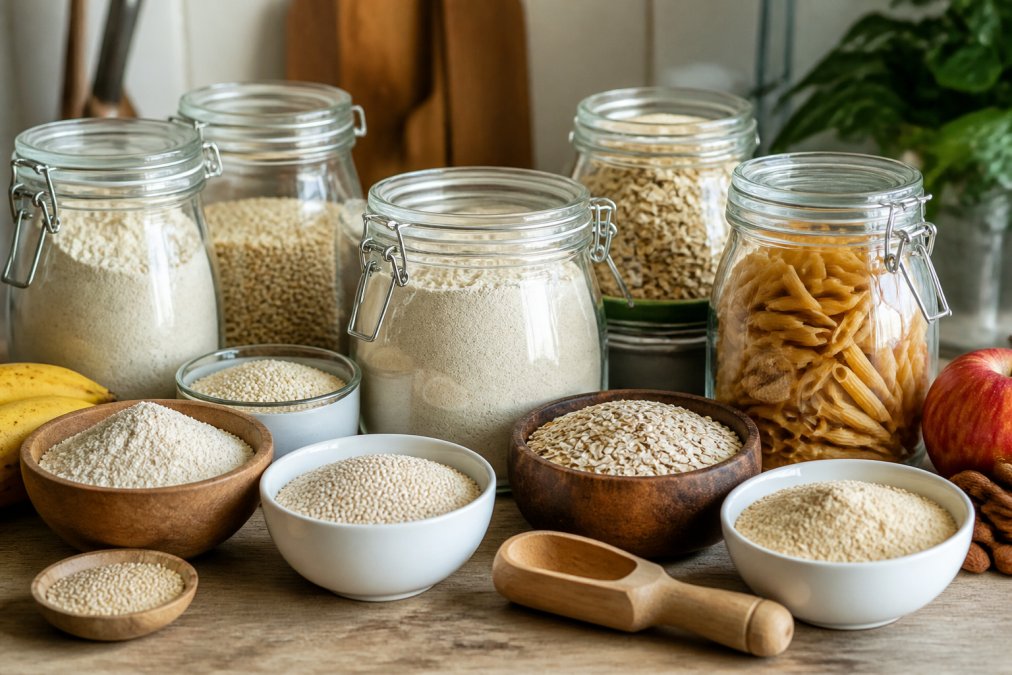
The best bulk staples are the ones you use weekly: flours, grains, pasta, and hot cereals. These form the backbone of a gluten-free kitchen and deliver the clearest bulk savings, but some reward a large bag while others quietly go stale before you finish them.
Flours and Grains
Flour and grain choices decide how well your baking performs. Buy the type that matches what you cook, and the size that matches how fast you cook it.
- Organic Chickpea Flour ($5.79): finely milled from whole dried chickpeas, nutty and mildly sweet. Replace up to 25% of wheat flour in baking or cooking. Note the allergy warning: it may have come into contact with wheat, gluten, soy, tree nuts, peanuts, eggs, dairy, and sesame.
- Almond Flour ($17.29): made from blanched almonds, low-carb and suited to paleo, keto, and grain-free baking. Contains almonds. Almond flour has a high fat content.
- Organic Gluten Free White Quinoa ($9.49): Royal Quinoa with a larger grain, fluffy texture, and nutty flavor. Non-GMO, kosher, and a source of vitamins B2, B6, and E.
- Organic Quinoa Red & White ($9.49): a blend of royal white and red quinoa for color and texture variety.
Pasta, Cereals, and Baking Mixes
Pasta and cereal are where bulk buying pays off fastest: you replace them most often and they have the longest shelf life of any gluten-free staple.
- Organic Gluten-Free Rigatoni Pasta ($6.49): short tubes made with organic corn and rice flour, egg-free. Boil 10 minutes for al dente.
- Organic Gluten-Free Fusilli Pasta ($6.49): spirals from the same corn and rice base. Boil 7 minutes.
- Organic Gluten-Free Pastina ($6.49): small round pasta, ideal for soups. Boil 5 minutes.
- Organic Gluten Free Quinoa Flakes ($6.99): a hot cereal alternative to oatmeal, also useful in desserts and cereal bars. Add 1/2 to 2/3 cup to boiling water or milk for a 40-gram portion, cover, and wait one minute.
- Organic Gluten Free Old Fashion Rolled Oats ($12.99): chewier texture, good for granola and baking. Oats are naturally gluten-free.
Which Staples Actually Reward Bulk Buying
Not every gluten-free item is a good bulk candidate. Use this as a sorting filter before you commit to a large bag:

- Best bulk candidates: dry pasta, white rice, cornmeal and polenta, certified gluten-free rolled oats, quinoa, and refined gluten-free starches (tapioca, potato, cornstarch). These keep for a year or more in airtight storage.
- Conditional bulk candidates: brown rice flour, chickpea flour, and other whole-grain flours. Buy larger only if you bake weekly or can freeze the reserve.
- Poor bulk candidates: almond flour, flax meal, and any nut or seed flour. The oils go rancid, and a large bag often spoils before it is used.
- Skip bulk entirely: baking mixes with leavening agents and added fats, which lose lift and freshness faster than single-ingredient flours.
How to Store Gluten-Free Flour Long Term
Store gluten-free flour long term in an airtight container kept cool, dark, and dry, and move larger quantities to the freezer. Oxygen, heat, and moisture shorten shelf life, not time alone.
Bulk Storage Solutions for Home Kitchens
Good storage is the difference between a bulk purchase that saves money and one that wastes it.
- Working jar: a one- to two-quart airtight glass or food-grade container you refill monthly. Glass is easiest to clean and does not hold odors.
- Bulk reserve: a larger airtight container or the original bag sealed inside a second food-grade container.
- Freezer reserve: for whole-grain and nut flours, portion the bulk bag into smaller freezer bags, press out the air, and label with the date. Bring only what you need to room temperature before baking to avoid condensation.
- Label everything with the product name and the date you opened it. Bulk flours look alike, and an unlabeled jar is a guessing game.
- Store away from the stove, dishwasher, and any direct sunlight.
- Never scoop from a bulk bag with a wet utensil. Moisture is the fastest route to clumping and mold.
- Watch for pests. Pantry moths and weevils arrive in flour and spread fast.
Cross-Contamination Safety Protocols
Cross-contamination matters more than price for anyone eating gluten-free for a medical reason. For celiac disease, even trace amounts of wheat, barley, or rye can trigger a reaction, so the goal is to keep products gluten-free after they enter your kitchen. Establishing a dedicated pantry space prevents these accidental exposures while providing a safe foundation for your gluten free baking.
- Keep a separate set of flour scoops, sifters, and measuring cups. Dedicated tools remove the risk entirely.
- Wipe counters and wash hands before handling gluten-free flours. A shared counter with wheat flour dust is a real transfer point.
- Store gluten-free items on a shelf above any wheat products, never below. Flour dust settles downward, so the top shelf is the safe shelf.
- Seal original bags inside a second container if your kitchen handles regular flour. The outer container catches any dust that would otherwise reach the food.
- Check labels for shared-facility warnings, like the one on the chickpea flour. A "may contain wheat" statement means the product was made on shared equipment and is not suitable for someone with celiac disease, even though the ingredients themselves are gluten-free.
- Verify the certification, not just the claim. A gluten-free certification mark means an independent body audited the facility and the product tested below the gluten threshold.
- Ask about dedicated facilities when buying in bulk. A product made on a dedicated gluten-free line carries far less cross-contact risk than one made on a shared line with a cleaning protocol between runs. This is the single most important question to ask before committing to a large quantity.
Dietary Certifications and Food Safety Standards to Check
Check for a recognizable gluten-free certification, a clear ingredient list, and any shared-facility allergy warning before buying in bulk. Certifications confirm a verified standard, not just a marketing claim.
Organic Gluten-Free Rigatoni Pasta →
What to verify on any bulk label:
- A gluten-free claim backed by a certification mark
- A complete ingredient list with no hidden gluten sources
- Allergen statements covering shared equipment
- Organic certification where the product claims to be organic
- A best-before date that gives you time to use the full quantity
Online Ordering and Shipping Logistics
Online ordering solves the availability problem physical stores create.
Bulk packaging is a key driver in this market for its practicality and efficiency, per Market Research Future's growth analysis, and shipping logistics decide whether that convenience holds up. A few things to weigh before ordering:
| Factor | What to Check | Why It Matters |
|---|---|---|
| Shipping cost | Free shipping threshold | Changes your true unit price |
| Packaging | Sealed, damage-resistant boxes | Prevents flour spills in transit |
| Delivery time | Stated timeline at checkout | Affects perishable and bulk items |
| Order size | Weight limits per box | Avoids split shipments |
| Returns | Policy on damaged goods | Protects a large order |
Subscription vs One-Time Purchase Models
Subscriptions suit staples you use on a fixed schedule; one-time purchases suit occasional items or products you want to test first. Neither is universally better.
A practical split for most households:
- Subscribe to two or three true staples you never want to run out of
- Buy everything else one-time as needed
- Review your subscription every few months and adjust quantities
- Pause rather than cancel if you are traveling or stockpiling
Conclusion
The hardest part of buying gluten-free in bulk is not finding products, it is finding a supplier with enough variety, fair prices, and damage-free shipping. Ambrosia Natural Foods has operated as a family-owned health food store since 1979, built around a bulk-buying model that passes savings to customers, with organic groceries, supplements, and natural beauty products in one place. With free shipping on orders of $79.99 or more and delivery across the country, stocking your pantry in one order is straightforward.
Frequently Asked Questions
Where can I bulk buy gluten-free flour?
Start with a health food store that carries a dedicated gluten-free section, such as Ambrosia Natural Foods. Look for flours like Organic Chickpea Flour ($5.79) or Almond Flour ($17.29) that are clearly labeled and stored away from wheat products. Buying two or three bags at once lowers your cost per pound and means fewer trips. Always check the best-before date and confirm the product was milled in a facility that manages allergen cross-contact.
What are the benefits of buying gluten-free staples in bulk?
Bulk buying lowers your cost per pound, cuts down on packaging waste, and reduces how often you need to shop. Bulk packaging is a key driver in the gluten-free market because it is practical for both retailers and consumers. For a household that eats gluten-free every day, buying larger quantities of pasta, quinoa, or oats means you always have safe options on hand and you spend less per meal.
How should I store gluten-free bulk items to maintain freshness?
Transfer flours and grains to airtight containers and keep them in a cool, dark cupboard. Organic Chickpea Flour keeps up to one year when stored properly, and longer in the freezer. Label each container with the date you opened it. For large bags you will not finish quickly, divide the contents into smaller portions so you only open one at a time. This limits moisture exposure and keeps the rest of your supply fresh.
How can I ensure my bulk gluten-free flour remains free from cross-contamination?
Keep dedicated containers, scoops, and measuring cups for gluten-free items only. Wipe down counters and wash your hands before you scoop from a bulk bin or bag. Availability of gluten-free foods in retail remains limited, so when you do find a trusted source, protect that supply. Store your gluten-free flours on a shelf above any wheat products, never below.
Are there specific certifications to look for when buying gluten-free in bulk?
Look for a certified gluten-free claim on the package, plus a kosher symbol if that matters to you. Ambrosia Natural Foods carries products like Organic Gluten Free White Quinoa and Organic Gluten-Free Rigatoni Pasta that are labeled gluten-free, non-GMO, and kosher. Certifications matter most when a product is milled or packaged in a shared facility, because they confirm the maker follows a verified allergen-control program.