

Table of Contents
- Start With a Grocery List and a Weekly Meal Plan
- Master Inventory Management for Your Fridge, Freezer, and Pantry
- How to Store Organic Produce to Last Longer
- Best Before vs Expiry Date in Canada: What the Labels Actually Mean
- Creative Ways to Use Vegetable Peels and Food Scraps
- Turn Leftovers Into Planned Meals
- Use Apps and Batch Cooking to Reduce Food Waste at Home
- Frequently Asked Questions
Last Updated: September 23, 2026
Start With a Grocery List and a Weekly Meal Plan
Learning how to reduce food waste at home starts with one habit: plan before you shop. A 2026 ReFED and YouGov survey found that households who plan meals consistently are 53% more likely to cut their food waste, and those who use leftovers are 36.7% more likely to succeed. At Ambrosia Natural Foods, we have watched this play out in our aisles since 1979: the shoppers with a list waste less and spend less.
Here is a simple weekly routine:
- Check your fridge, freezer, and pantry before writing anything down
- Plan 5 dinners and note which nights use leftovers
- Build your grocery list from that plan, not from memory
- Shop once, with a full stomach, and stick to the list
Master Inventory Management for Your Fridge, Freezer, and Pantry
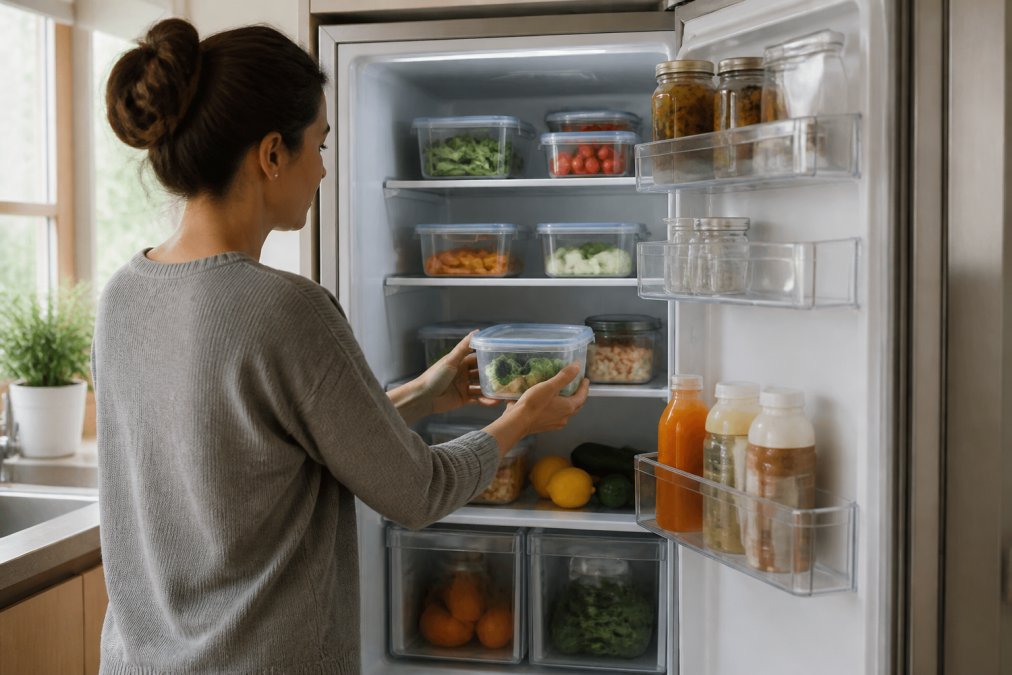
Inventory management is the practice of knowing what food you own, where it sits, and when it expires. Recent guidance now puts checking your pantry and freezer before shopping at the top of the list. A quick shelf audit takes five minutes and saves a full grocery run.
How to Store Organic Produce to Last Longer
How to store organic produce to last longer comes down to three things: temperature, airflow, and separation. Get those right and most organic fruit and veg last days longer, which cuts both waste and your grocery bill. The bigger opportunity most guides skip is moving beyond the fridge into preservation methods that extend shelf life by weeks or months.
Start with the storage basics:
- Keep your fridge at 1 to 4°C
- Store leafy greens in airtight containers with a paper towel
- Keep apples and bananas away from other produce, since they speed ripening
- Leave potatoes, onions, and garlic in a cool, dark, dry spot
- Freeze what you cannot eat in time
Go Beyond the Fridge: Pickling, Dehydrating, and Canning
Freezing is where most advice stops, but three older methods stretch shelf life far longer and use equipment you may already own.
- Pickling, A simple brine of vinegar, water, salt, and sugar turns cucumbers, carrots, onions, and peppers into fridge pickles that keep for weeks. Quick pickles need no canning pot and live in the fridge for about a month.
- Dehydrating, An oven on its lowest setting, or a countertop dehydrator, dries herbs, apple slices, tomato halves, and mushroom stems into shelf-stable snacks and soup starters. Dried goods keep for months in airtight jars away from light.
- Canning, Water-bath canning works for high-acid foods like tomatoes, salsa, jams, and pickles. Pressure canning is required for low-acid vegetables and meats. Follow a tested recipe and current processing times, because botulism risk is real when low-acid foods are canned incorrectly.
Match the Method to the Produce
Not every item deserves the same treatment. A quick rule of thumb:
| Produce | Best Method | Typical Fridge Life | Extended Life |
|---|---|---|---|
| Leafy greens | Airtight container + paper towel | 3-5 days | 7-10 days |
| Berries | Dry, single layer, unwashed | 2-4 days | 5-7 days |
| Carrots and cucumbers | Fridge pickling | 1-2 weeks | 3-4 weeks |
| Herbs | Freeze in oil or dehydrate | 1 week | 3-6 months |
| Tomatoes | Water-bath canning | 1 week | 12 months |
| Apples | Dehydrate or freeze slices | 2-4 weeks | 6-12 months |
Best Before vs Expiry Date in Canada: What the Labels Actually Mean
Best before vs expiry date in Canada confuses almost everyone, and that confusion sends safe food to the bin. A best-before date tells you when a product may lose peak freshness, taste, or nutrition. It is not a safety deadline. Only a small set of foods carry a true expiry date, and those are the ones you must heed. For everything else, your nose and eyes are better judges than the stamp.
Creative Ways to Use Vegetable Peels and Food Scraps
Creative ways to use vegetable peels turn trash into stock, snacks, and seasoning. The Hapres Journal of Sustainability Research notes that repurposing scraps is one of the most practical ways to cut waste at home. Research in ScienceDirect's food waste research also shows structured planning can cut vegetable waste by up to 28%.
Try these:
- Simmer peels, ends, and stems into a vegetable stock
- Roast potato and carrot peels with oil and salt for chips
- Save onion skins and herb stems in a freezer bag for soups
- Blend wilted greens into pesto or smoothies
- Turn stale bread into croutons or breadcrumbs
Turn Leftovers Into Planned Meals
Leftovers are not an afterthought; they are a planned meal. The same 2026 ReFED and YouGov data shows leftover use is one of the strongest habits linked to lower household waste. The trick is to plan them on purpose.
| Leftover | Second Meal | Storage Time |
|---|---|---|
| Roast chicken | Tacos or soup | 3-4 days |
| Cooked rice | Fried rice | 1 day |
| Roasted veg | Frittata or grain bowl | 3-4 days |
| Chili or stew | Freezer portions | 3 months |
Use Apps and Batch Cooking to Reduce Food Waste at Home
Apps and batch cooking help you reduce food waste at home by removing guesswork. Meal planning for zero waste works best when you combine a weekly plan with a few hours of prep. A 2026 industry report from Avery Dennison put the global food waste bill at $540 billion, so small household habits add up to real money.
Track What You Own With an App
Most guides mention apps in passing. The real value is in choosing one that matches how you already shop and cook. Three categories cover almost every household:
- Inventory and expiry trackers, Apps in this group let you scan barcodes, log best-before dates, and get a reminder before something turns. They work best if you log items as you unpack groceries, not later.
- Shared grocery and meal lists, A shared list keeps everyone in the house on the same plan, so no one buys a second jar of the same spice. These are often free and sync across phones.
- Recipe-by-ingredient tools, You enter what is in the fridge and the app suggests recipes. This is the fastest way to use up odds and ends before they spoil.
Quantify the Payoff
It is hard to stay motivated without seeing the return. Track your own numbers for four weeks:
- Note your weekly grocery spend before you start.
- Keep a small tally of what you throw out and roughly what it cost.
- After a month of planning, batch cooking, and tracking, compare both numbers.
Build a Weekly Prep Routine That Sticks
A batch-cooking session only pays off if it feeds the plan. Use this order:
- Shop with the plan, Buy only what the week's meals need, plus a small buffer for busy nights.
- Prep within 24 hours, Wash, chop, and portion produce the day you bring it home, while it is still fresh.
- Cook two base proteins and two grains, These become the backbone of several meals.
- Portion and label, Date every container so you eat the oldest first.
- Plan one "use-it-up" meal, A stir-fry, soup, or frittata that absorbs whatever is left by week's end.
Frequently Asked Questions
How can meal planning help reduce household food waste?
A 2026 ReFED and YouGov survey found that households that plan meals consistently are 53% more likely to report reducing their food waste. When you map out dinners for the week before shopping, you buy only what you'll cook, and you can build meals around what's already in your fridge. Pair your plan with a grocery list and check your pantry first. That single habit prevents duplicate purchases and stops produce from wilting unnoticed at the back of the crisper.
What is the difference between best before and expiry dates in Canada?
In Canada, a best-before date tells you when a food's freshness, taste, and nutritional value may start to decline, but it doesn't mean the food is unsafe. An expiry date is only required on a small number of products, like certain infant formulas and meal replacements, and it's the last day the item should be consumed. Confusing the two is a major cause of premature disposal. Use your senses for best-before items and follow expiry dates strictly.
What are the best ways to repurpose food scraps like vegetable peels?
Vegetable peels can become stock, crisps, or pesto rather than trash. Simmer carrot, onion, and celery scraps in water for 30 minutes to make vegetable stock, then freeze it in ice cube trays. Potato and apple peels tossed in oil and baked at 200°C (400°F) for 15 minutes make crispy snacks. Blitz herb stems and wilted greens into pesto. Keep a freezer bag for scraps and add to it daily; you'll have stock-ready ingredients within a week.
How does proper food storage extend the shelf life of organic produce?
Storing produce correctly can add days or even weeks to its shelf life. Keep your refrigerator at or below 4°C (40°F) to slow spoilage. Store leafy greens in airtight containers with a paper towel to absorb moisture, keep ethylene-producing fruits like bananas and apples away from ethylene-sensitive vegetables, and freeze anything you won't use within a few days. A 2026 industry analysis found households still waste 30% to 40% of the food they bring home, so better storage directly cuts that loss.
Cutting food waste at home is not about perfection. It is about a plan, a quick inventory check, and using what you already bought. Ambrosia Natural Foods can help with that. We are family-owned since 1979, we offer organic groceries, supplements, and natural beauty in one place, and our bulk-buying model passes real savings to you. We ship across the country, with free shipping on orders of $79.99+. Get started with Ambrosia Natural Foods and shop smarter for your household.